Expert Vulvar Cancer Surgery in West Delhi: A Complete Guide by Dr. Sarika Gupta
New Delhi: A diagnosis of vulvar cancer raises a lot of questions. What treatment do you need? How much surgery will be required? Will it affect your daily life? The answers depend on the stage of the disease and the experience of the surgeon treating it.
If you are looking for vulvar cancer surgery in West Delhi, Dr. Sarika Gupta provides specialist surgical care for women with vulvar cancer and other gynecologic cancers. Her treatment plans focus on complete cancer removal while preserving healthy tissue whenever it is medically appropriate.
About Dr. Sarika Gupta
Dr. Sarika Gupta is the Director and Unit Head of Gynae Oncology at Action Cancer Hospital, Paschim Vihar. For more than 21 years, she has treated women with cervical, ovarian, uterine and vulvar cancers.
Earlier in her career, she served as Senior Consultant and Unit Head at Rajiv Gandhi Cancer Institute & Research Centre and later as Senior Consultant at Indraprastha Apollo Hospitals, New Delhi.
She completed a Clinical Fellowship in Gynae Oncology and Robotic Surgery at the Florida Cancer Institute in the United States and also underwent surgical observership training at Memorial Sloan Kettering Cancer Center. Her practice includes minimally invasive surgery, robotic procedures, complex pelvic surgery and reconstructive gynecologic oncology.
Symptoms of vulvar cancer
Vulvar cancer usually develops slowly. In some women, it starts as vulvar intraepithelial neoplasia (VIN), which is a precancerous condition.
Symptoms may include:
- A lump, sore or ulcer that does not heal
- Persistent itching, burning or pain around the vulva
- Changes in skin colour or skin thickness
- Bleeding or discharge unrelated to menstruation
If these symptoms continue for more than a few weeks, they should not be ignored. An early examination often makes treatment simpler and may reduce the extent of surgery. Many patients from Paschim Vihar, Punjabi Bagh, Rohini, Janakpuri and Pitampura visit Action Cancer Hospital for evaluation and treatment.
When is surgery recommended?
Surgery is the standard treatment for most cases of vulvar cancer. It may also be advised for women with advanced VIN that has not responded to other treatment.
In some patients, lymph node assessment is performed during surgery to determine whether the cancer has spread. That information helps guide any additional treatment after the operation.
The procedure is planned only after reviewing the tumour size, biopsy findings, imaging results and the patient’s overall health.
Surgical options
The operation varies from one patient to another.
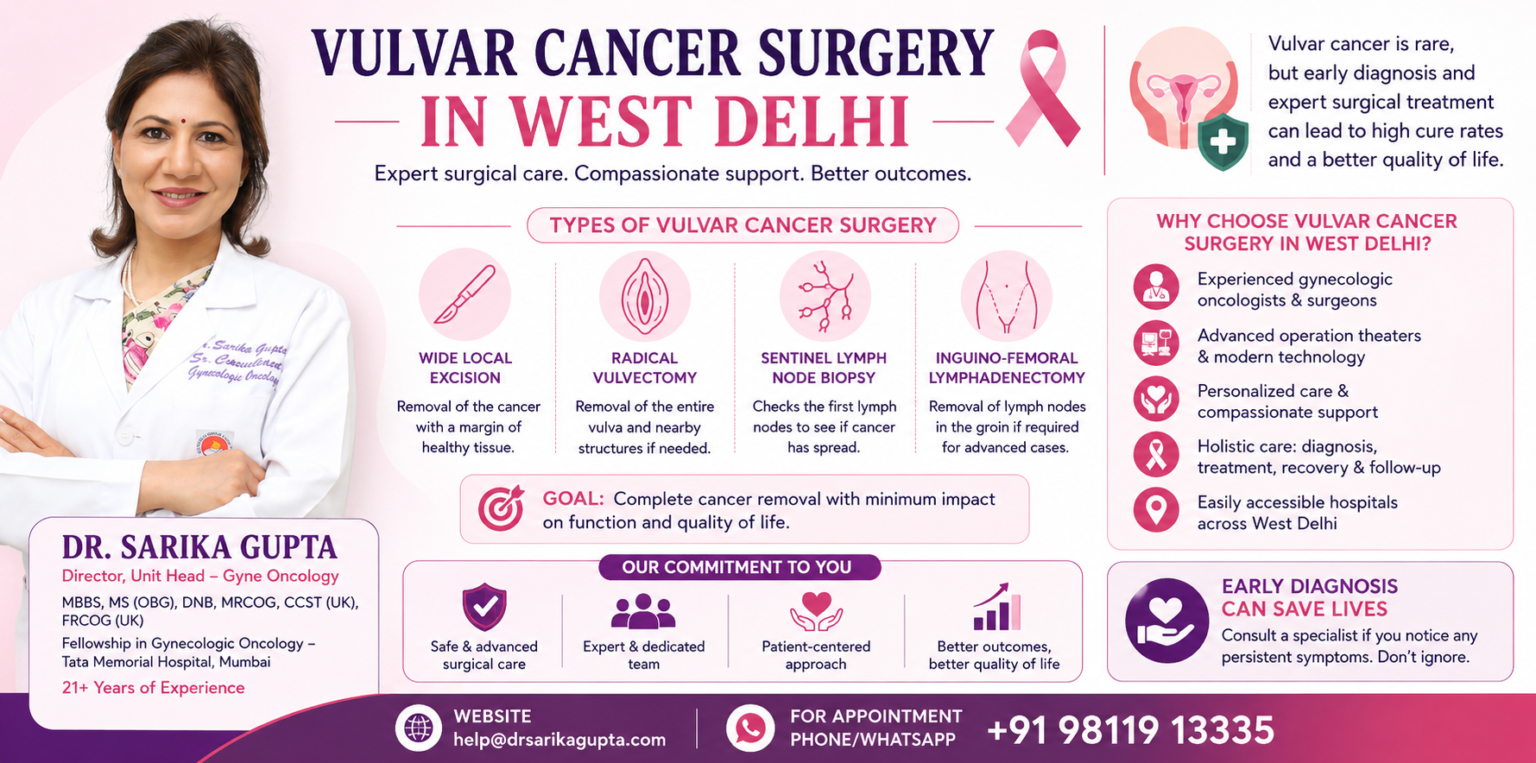
A wide local excision removes the tumour along with a rim of healthy tissue.
A radical partial vulvectomy removes the cancer and surrounding tissue while preserving unaffected areas whenever it is safe.
A complete radical vulvectomy is reserved for more extensive disease. In selected patients, reconstructive surgery can be performed during the same operation.
A sentinel lymph node biopsy identifies the first lymph nodes that drain the tumour. If those nodes are free of cancer, further lymph node removal may not be necessary. This can reduce the risk of long term complications such as leg swelling.
Open, laparoscopic and robotic surgery
The vulvar tumour itself is removed through a direct surgical approach. Lymph node surgery can be performed using open, laparoscopic or robotic techniques, depending on the clinical situation.
Open surgery remains appropriate for some patients but usually involves larger incisions and a longer recovery.
Laparoscopic surgery uses small incisions and a camera, which may reduce postoperative discomfort.
For carefully selected patients, robotic surgery with the Da Vinci system provides a magnified view and greater instrument precision during lymph node dissection. The approach can reduce blood loss and tissue trauma while helping patients recover sooner.
Recovery after surgery
Recovery is different for every patient. It depends on the type of operation and how much tissue needs to be removed.
Minor excision: Most women go home the same day or after one night in the hospital. Everyday activities usually become easier within 1 to 2 weeks.
Radical vulvectomy with lymph node removal: This operation usually involves a hospital stay of several days. The surgical wounds often take 4 to 8 weeks to heal.
Some patients leave the hospital with small drainage tubes in the groin. These are usually removed during a clinic visit within one or two weeks. Keeping the wound clean, getting enough rest, and avoiding heavy exercise or sexual activity until your surgeon says it is safe all help with recovery.
Possible risks and complications
No surgery is completely free of risk. Possible complications include:
- Wound infection or slow healing
- Bleeding or a hematoma (blood collecting under the skin)
- Lymphedema, which causes swelling in the legs after lymph node removal. A sentinel lymph node biopsy lowers this risk because fewer lymph nodes are removed.
- Changes in sexual sensation or sexual function if a larger amount of tissue has to be removed
Follow-up after surgery
Follow-up appointments are part of your treatment, not just a routine check-up. Most patients are seen every 3 to 4 months during the first two years. If everything remains normal, the visits become less frequent.
At each visit, Dr. Sarika Gupta examines the treated area, looks for any sign that the cancer has returned, checks how healing is progressing, and discusses any symptoms or concerns you may have.
When should you seek a second opinion?
A second opinion is worth considering if:
- You want to know whether a less extensive operation is an option.
- You have been advised to undergo a radical vulvectomy without discussing reconstruction.
- You want to find out if you are eligible for a sentinel lymph node biopsy instead of complete groin lymph node removal.
Many patients also seek a second opinion simply because they want to feel confident before making a major treatment decision.
FAQs
Can vulvar cancer be cured with surgery alone?
Often, yes. If the cancer is found early and has not spread to the lymph nodes, surgery alone may be enough. If it has spread, radiation therapy, chemotherapy, or both may be recommended after surgery.
What is a sentinel lymph node biopsy?
It is a procedure that removes only the first lymph node, or the first few lymph nodes, where cancer is most likely to spread. If those nodes are free of cancer, many patients can avoid having all of the groin lymph nodes removed. That greatly reduces the chance of long-term leg swelling.
How will a vulvectomy affect my sexual function?
The answer depends on how much tissue needs to be removed. A smaller operation may have very little effect. More extensive surgery can change sensation and sexual function. Your surgeon should explain these changes before treatment so you know what to expect.
Will I need reconstructive surgery?
Not always. If a large area has to be removed, reconstruction using nearby tissue may be recommended. In some cases, Dr. Sarika Gupta works with a plastic surgeon during the same operation to rebuild the area.
Can I still become pregnant after vulvar cancer surgery?
Yes. Vulvar surgery does not involve the uterus or ovaries, so it does not directly affect fertility or the ability to carry a pregnancy. If you are planning a family, discuss it with your doctor before treatment begins.
Does health insurance cover vulvar cancer surgery?
In most cases, yes. Vulvar cancer surgery is a medically necessary treatment, and many health insurance plans in India cover it. The exact coverage depends on your insurer and policy.
Conclusion
Being diagnosed with vulvar cancer is frightening, and deciding on surgery can feel like a lot to process. Clear information and an experienced surgical team make that decision easier.
Dr. Sarika Gupta treats women with vulvar cancer in West Delhi and discusses every treatment option in detail, including the expected benefits, possible risks, and recovery. If you have recently been diagnosed or would like another opinion before surgery, a consultation can help you understand the choices available and decide what is right for you.
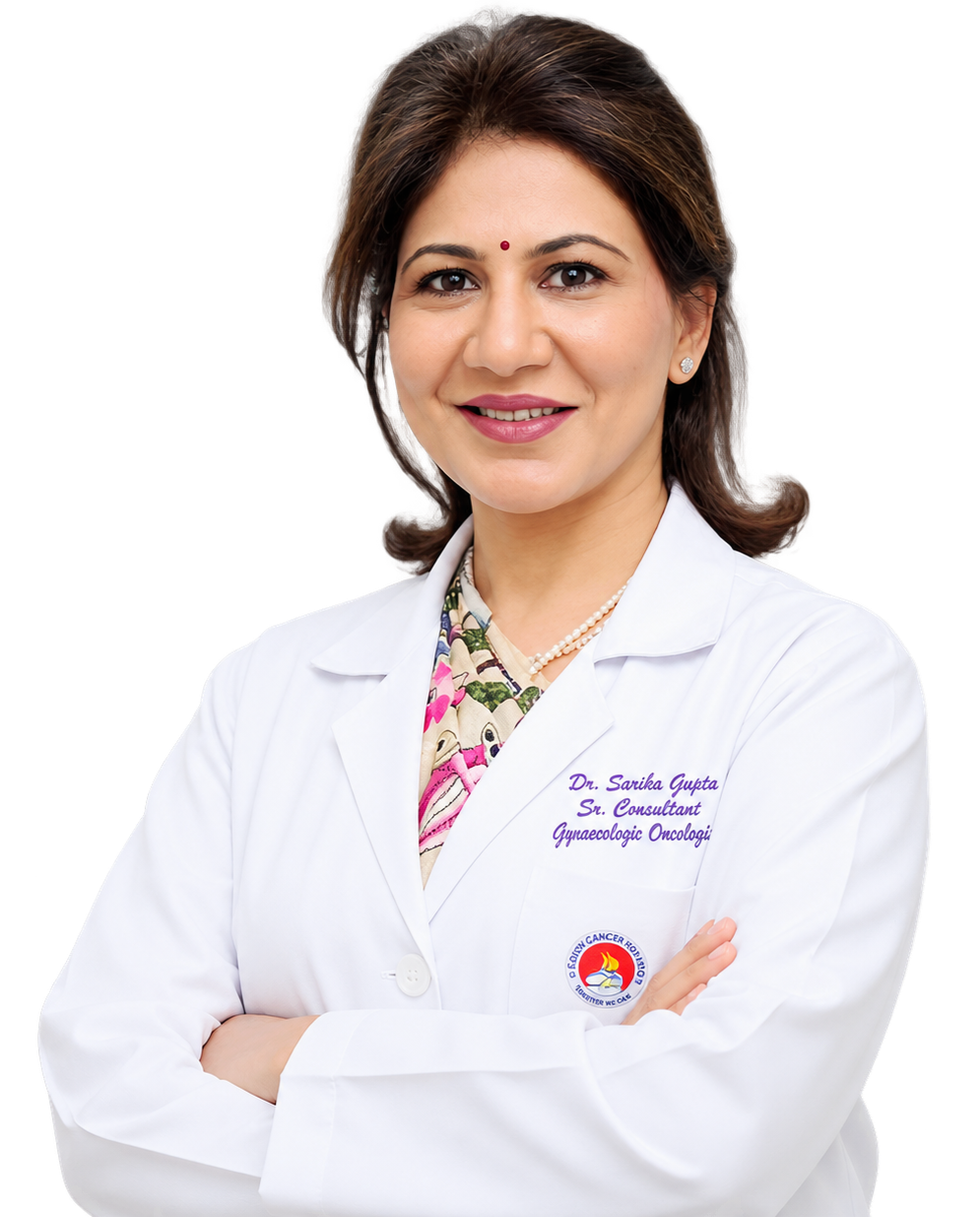
Dr. Sarika Gupta
Director and Unit Head of Gynae Surgical Oncology at Action Cancer Hospital.